One of the most common themes related to nostalgia is that of the Good Old Days—the rocking chair on Grandma’s porch, the lemonade stand, a bicycle ride down a country lane, and fireworks on the Fourth of July. We rarely remember falling off the bike and scraping up our knees, or the spiders that nested under the boards of grandma’s porch, or how hot it was sitting out waiting for someone to show up and buy the lemonade, or the time you burned your fingers holding a sparkler too close.
Humans seem to have a strong mental and emotional need to remember the best parts of these things. Perhaps this helps us to stave off depression and anxiety. Whatever the reason, these memories are some of the strongest and most important to our personal identity and emotional wellbeing.
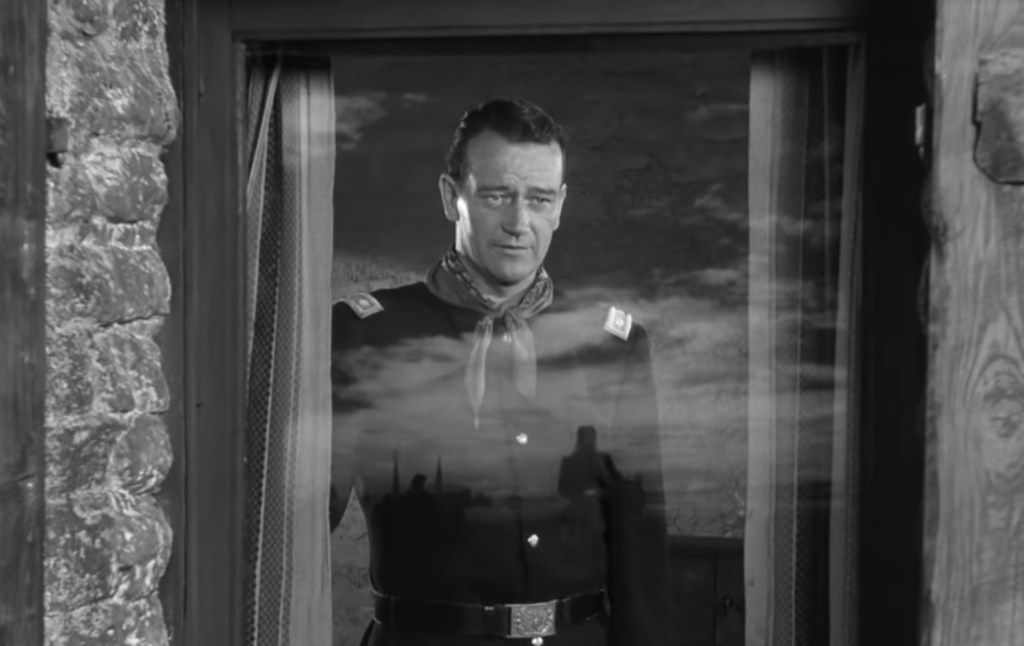
Returning to Fort Apache.
People commemorate Lt. Colonel Owen Thursday for his Custard-style charge that resulted in his death and the death of his men. The last scene opens with a portrait of the Colonel mounted in his office and his saber below it. They immortalize him, but even though he died with his men around him, his portrait stands alone.
An officer emphasizes that everyone has forgotten these men who died with him.
In a rousing speech, Captain York corrects the young officer.
“You’re wrong there. They aren’t forgotten, because they haven’t died. [cue “Battle Hymn of the Republic”] They’re living. Right out there. [refection in the window of the cavalry riding past] Collingwood and the rest. They’ll keep on living as long as the regiment lives. Their pay is $13 a month. Their diet beans and hay—maybe horse meat before this campaign is over. They’ll fight over cards or rotgut whiskey, but they’ll share the last drop in their canteens. The faces may change, [and] the names, but they’re there. They’re the regiment. The regular army. Now and fifty years from now.”
Though York disagreed with Thursday’s decisions and actions while he was alive, he allows the Colonel to live on as a symbol of what the Cavalry should be. The men who die with Colonel Thursday live on in spirit in those who come after. Ford will continue this theme of “Printing the Legend” throughout his western. Sometimes the idea of something is more important than the thing itself. What comes out of the aftermath can be better and more beautiful.

 Why We Tell Stories
Leave a comment